Landmark’s history begins with the Reagan Revolution, one of the most effective political movements of the 20th century. The Reagan Administration changed the trajectory of American history by confronting the Communist bloc abroad and challenging the liberal orthodoxy of domestic policy at home. We are proud of this legacy and continue to ensure that the Reagan Revolution has an impact on the law and judiciary by bringing their conservative approach to the issues of the day.— Pete Hutchison, Landmark’s President
About Us
Landmark Legal Foundation is a national non-profit public interest law firm that defends the Constitution and promotes liberty through legal advocacy and education. Our work is rooted in originalism, a philosophy in which the Constitution is interpreted according to the Founders’ intent. We believe that originalism anchors America to its founding principles, allowing freedom to endure the test of time.
Staff
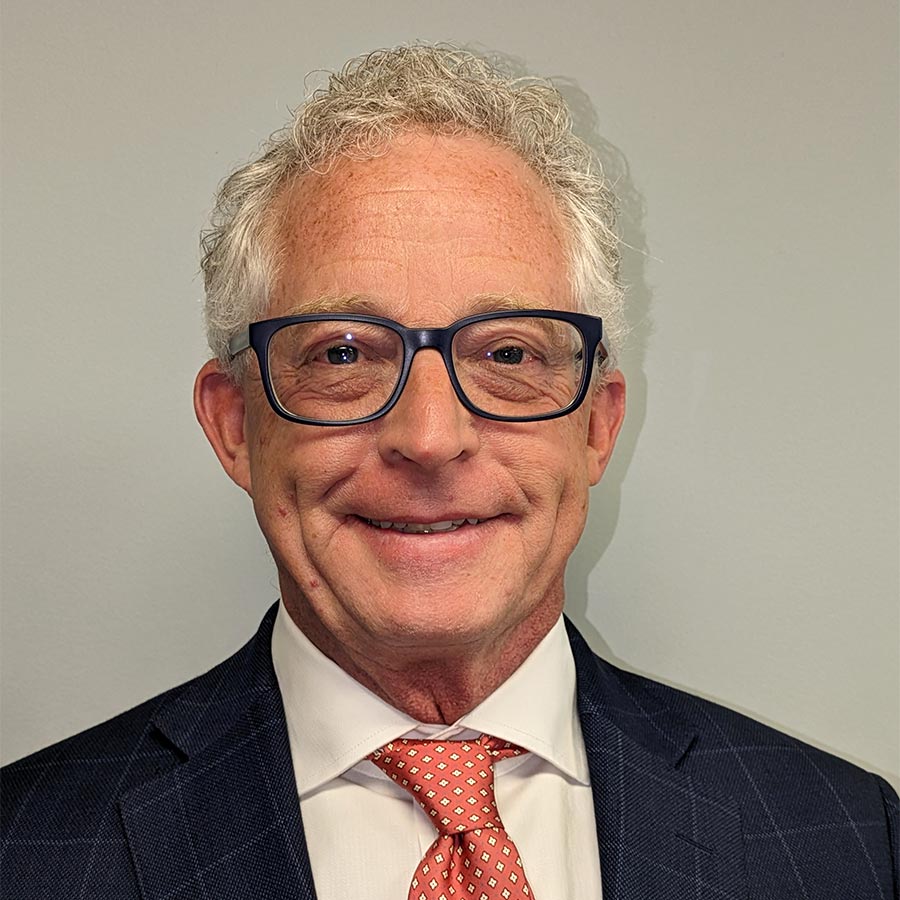
Richard P. (Pete) Hutchison, Esq.
President & General Counsel
Richard P. “Pete” Hutchison has dedicated more than 30 years to serving the conservative movement with Landmark Legal Foundation.
Richard P. “Pete” Hutchison
President & General Counsel, Landmark Legal Foundation
Richard P. “Pete” Hutchison has devoted more than three decades to advancing the rule of law and conservative principles through his leadership at Landmark Legal Foundation. As President and General Counsel, Mr. Hutchison has been at the forefront of some of the most consequential public policy battles of the past quarter century—championing school choice, challenging labor union coercion, and confronting federal agency overreach at the EPA, IRS, and other bureaucracies.
Mr. Hutchison has played a pivotal role in litigation defending voter integrity and constitutional limits on government power, contributing dozens of amicus curiae briefs to the United States Supreme Court. He has also argued cases before the Missouri and Wisconsin Supreme Courts and the U.S. Courts of Appeals for the D.C. and Tenth Circuits. Prior to becoming President, Mr. Hutchison served as Landmark’s General Counsel for 20 years, shaping the Foundation’s legal strategy and institutional voice. He is honored to follow in the footsteps of his longtime colleague and friend, Mark Levin.
Mr. Hutchison earned his Juris Doctor from the University of Missouri–Kansas City and holds a Bachelor of Arts in Economics from Missouri State University. He also attended Benedictine College. Beyond his legal work, Mr. Hutchison has served on the Board of Rectors for Conception Seminary College and currently serves as President of the Board of Birthright of Greater Kansas City.
Pete and his wife Judy are the proud parents of seven adult children and grandparents to three.
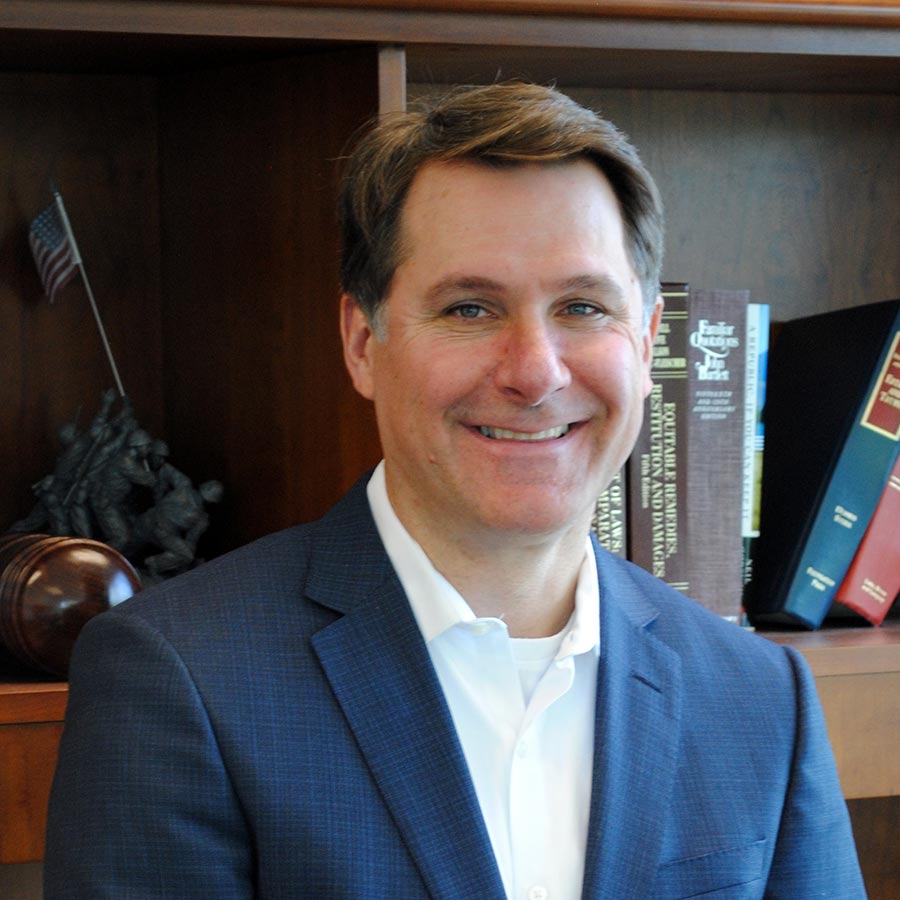
Michael J. O’Neill, Esq.
Vice President of Legal Affairs
Michael J. O’Neill serves as Landmark’s assistant general counsel and the Barbara K. Olson Legal Counsel, specializing in constitutional and regulatory law.
Michael J. O’Neill, Esq.
Vice President of Legal Affairs, Landmark Legal Foundation
Now in his 25th year at Landmark Legal Foundation, Michael J. O’Neill serves as Vice President of Legal Affairs, where he leads the Foundation’s constitutional and regulatory litigation efforts. A graduate of Villanova University and the Catholic University of America’s Columbus School of Law, Mr. O’Neill has built a distinguished career defending the rule of law and exposing abuses of power.
He has authored numerous amicus briefs before the United States Supreme Court and played a key role in uncovering tax irregularities and improper political spending by nonprofit organizations. His legal expertise and principled advocacy have made him a sought-after commentator on national and local media outlets.
Mr. O’Neill’s writing spans academic journals, major news platforms, and online publications, where he contributes thought-provoking opinion pieces on constitutional governance and legal reform. He is a member of both the Federalist Society and the American Bar Association, and is licensed to practice law in Virginia, the District of Columbia, and before the United States Supreme Court.
Matthew C. Forys, Esq.
Executive Vice President
Matthew C. Forys serves as Landmark’s assistant general counsel and the Edwin Meese III Legal Counsel.
Matthew C. Forys
Executive Vice President & Chief of Staff, Landmark Legal Foundation
Matthew C. Forys serves as Executive Vice President and Chief of Staff at Landmark Legal Foundation, where he oversees strategic operations and leads key educational initiatives, including the Gary L. McDowell Fellowship and the Edwin Meese III Internship Program. A graduate of Lafayette College and Rutgers School of Law, Mr. Forys brings deep constitutional insight and operational leadership to Landmark’s mission.
Over the course of his tenure, Mr. Forys has authored numerous amicus curiae briefs before the U.S. Supreme Court, offering rigorous constitutional and historical analysis in some of the most consequential separation of powers cases of our time. His legal writing is widely recognized for its clarity, depth, and fidelity to the Founders’ vision.
Before joining Landmark, Mr. Forys practiced law in New York and New Jersey and served as a domestic policy analyst on Capitol Hill. He is also a veteran of Operation Iraqi Freedom and retired as a Lieutenant Colonel in the U.S. Army Reserve.
Mr. Forys is licensed to practice law in New York, New Jersey, and Virginia, and is a member of the United States Supreme Court Bar.
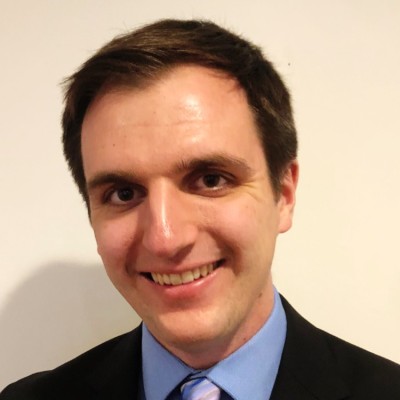
Joshua C. Frey
Development Manager
Joshua C. Frey serves as Landmark’s development manager and oversees email and social media communications.
Joshua C. Frey
Senior Development Manager, Landmark Legal Foundation
Joshua C. Frey serves as Senior Development Manager at Landmark Legal Foundation, where he leads the Foundation’s fundraising strategy, social media engagement, and email outreach efforts. Since joining Landmark in 2022, Josh has played a pivotal role in expanding the Foundation’s national base of supporters—ensuring Landmark has the resources and reach to defend the Constitution against growing threats.
A passionate advocate for America’s founding principles, Josh is driven by a deep belief in the enduring value of the constitutional system our Founders established. He views Landmark’s work as essential to preserving liberty for future generations, including his own children.
Josh is a graduate of the Ashbrook Scholar Program at Ashland University, where he earned degrees in Political Science and History. Prior to joining Landmark, he held leadership roles in nonprofit outreach and policy advocacy, bringing a strong background in civic engagement and strategic communications to his current work.

Sharri Hacker
Vice President of Administration
Sharri Hacker serves as Vice President of Administration at Landmark Legal Foundation, where she has been a cornerstone of the organization’s operations for nearly three decades.
Sharri Hacker
Vice President of Administration, Landmark Legal Foundation
Sharri Hacker serves as Vice President of Administration at Landmark Legal Foundation, where she has been a cornerstone of the organization’s operations for nearly three decades. Since joining the Foundation in 1996, Ms. Hacker has overseen the day-to-day administrative functions that keep Landmark running smoothly—from donation processing and financial management to payroll, benefits, and compliance.
Ms. Hacker’s meticulous stewardship ensures that Landmark remains accountable to its supporters and mission-driven in its operations. Her passion for Landmark stems from a deep alignment with its conservative principles and constitutional vision. She believes strongly in the Founders’ legacy of faith and freedom and is proud to support Landmark’s work on election integrity, border security, and government accountability.
Before joining Landmark, Sharri spent ten years in banking operations and later returned to the workforce after raising her children. She is also deeply involved in her community, volunteering with Harvester’s Food Pantry and the American Cancer Society’s Hope Lodge through The Gathering Baptist Church.
Board of Directors
Pete Hutchison, President
John Richardson, Chairman
Steve Matthews, Vice-Chair
Edwin Meese III, Vice-Chair
Lawrence Davenport, Treasurer
Mark Levin, Chairman Emeritus
Timeline
Slaughter v. Trump:
We urged the Supreme Court to overturn Humphrey’s Executor, a 1935 decision which ruled that federal employees who exercised “quasi-legislative” or “quasi-judicial” functions could not be fired by the President. By protecting the heads of independent agencies from accountability to the President, Humphrey’s Executor undermines the system of checks and balances designed by our Framers. Overturning it would be a historic victory for constitutional separation of powers.
Louisiana v. Callais:
We supported a challenge to racially gerrymandered congressional districts. In 2022, a federal district court ordered Louisiana to redraw their congressional maps and create a second majority-minority district. This ruling forced the state to create an illegal racial gerrymander. The map struck directly at the foundational American ideal that our government will not treat people differently and pit them against one another based on the color of their skin.
Bost v. Illinois Board of Elections:
With the expansion of voting by mail, many states have begun counting ballots received after election day – delaying results and opening the door for abuse. Illinois Congressman Mike Bost sued the Illinois State Board of Elections over this practice. Landmark filed an amicus brief at the U.S. Supreme Court on behalf of Election Integrity Project California, Inc. Writing in support of Petitioners, we urged the Court to agree to hear Congressman Bost’s case.. This is a critical case for election integrity nationwide as candidates are ideally positioned to challenge improper election laws and courts should not unfairly limit their rights.
National Education Association v. Department of Education:
In July, Landmark submitted a brief defending the Trump administration’s efforts to rid our schools of DEI programs. These efforts had been challenged by the National Education Association, who convinced a federal judge to halt them with an injunction. Our brief highlighted a critical point about judicial authority: federal judges are empowered to resolve disputes between parties, not to issue sweeping nationwide orders affecting everyone.
Planned Parenthood v. Kennedy (U.S. Court of Appeals for the First Circuit):
The Big Beautiful Bill included a provision that barred Medicaid funding for organizations that provide elective abortions. Planned Parenthood sued, claiming that this amounted to a "Bill of Attainder." Incredibly, the Circuit Court agreed with them and ordered the government to continue funding Planned Parenthood. The Trump administration appealed this ruling, and we filed a brief in support.
E.M.D Sales, et al. v. Carrera:
We fought a ruling from the Fourth Circuit Court of Appeals that forced employers to meet a clear and convincing evidence standard when proving exemptions to overtime regulations. If this ruling were upheld, it would have made it nearly impossible to get an exemption, which would have limited businesses’ ability to hire outside salespeople or other employees who work atypical schedules. In another unanimous opinion, the Supreme Court sided with Landmark and secured a victory for business owners and workers across the country.
Smith & Wesson v. Estados Unidos de Mexicanos:
We fought a lawsuit from the Mexican government which attempted to hold American gun manufacturers liable for violence committed by Mexican drug cartels. They brought this lawsuit despite being unable to identify any instances of wrongdoing on the part of Smith & Wesson. We urged the Supreme Court to dismiss this lawsuit, which they did unanimously.
United States v. Trump:
Landmark was one of the only groups fighting against Jack Smith’s prosecution of Donald Trump. We argued that, because his appointment had not been confirmed by the Senate, he lacked the authority to bring charges against Trump. Judge Aileen Cannon ordered a hearing on this question and, after hearing our argument, dismissed Smith’s charges.
Trump v. Anderson:
The Colorado Supreme Court attempted to prevent Donald Trump from appearing on the ballot in 2024 by weaponizing a provision in the 14th Amendment which prohibited those who had engaged in insurrection from holding office. We fought this at the Supreme Court, which ruled 9-0 that the Colorado court erred.
Biden v. Nebraska:
President Biden’s attempt to forgive student loans via executive order presented a massive threat to constitutional separation of powers. Landmark’s brief urged the Supreme Court to reject this unconstitutional boondoggle, which they did in a 6-3 decision.
Glacier Northwest v. International Brotherhood of Teamsters:
In this case, striking truck drivers left the jobsite while their trucks were still mixing concrete, knowing that this would cause significant damage to the trucks. We argued that the National Labor Relations Act did not protect behavior (like intentional destruction of property) that was otherwise illegal. In a 8-1 decision, the Supreme Court agreed.
Landmark established the Gary L. McDowell Fellowship
Named for a key player in the Reagan administration’s push for constitutional originalism, this program offers rigorous intellectual and professional preparation for recent college graduates preparing for law school.
Landmark’s investigation of Randi Weingarten and the American Federation of Teachers revealed millions of dollars of unreported political spending.
They reported $0 of political spending despite sponsoring a national bus tour for the Biden/Harris campaign. We’ve filed a complaint with the IRS and are continuing our investigation. On their most recent tax filing, the AFT did report their political spending, indicating that Landmark’s pressure is getting results!
Landmark’s FOIA request exposed the Biden’s administration’s weaponization of the Justice Department.
When Attorney General Merrick Garland directed FBI counter-terrorism resources be used to investigate parents voicing opposition to DEI at school board meetings, we requested records showing evidence of a threat that would warrant this response. DOJ records showed that no such threat existed, revealing that Garland’s order was simply an attempt to intimidate the Biden administration’s political opponents.
Brnovich v. Democratic National Committee:
We defended an Arizona law implementing common sense restrictions on ballot harvesting. The DNC challenged the law, claiming it amounted to racial discrimination in violation of the Voting Rights Act, but a 6-3 Supreme Court affirmed Arizona’s right to limit ballot harvesting.
Husted v. Randolph Institute:
When Ohio attempted to remove dead and inactive voters from their rolls, they faced a legal challenge from a well-funded leftwing group that went all the way to the Supreme Court. Landmark defended Ohio’s law and helped secure a 5-4 victory that upheld the ability of states to maintain accurate voter rolls.
Shelby County v. Holder:
Section 5 of the 1965 Voting Rights Act required certain jurisdictions with a history of racial discrimination to obtain authorization from the Department of Justice to make changes to their election laws. We argued that this section of the Voting Rights Act was only appropriate in response to exceptional and unique circumstances that no longer existed. In a 5-4 decision, the Supreme Court struck down Section 5 as unconstitutional.
Shelby County v. Holder:
Section 5 of the 1965 Voting Rights Act required certain jurisdictions with a history of racial discrimination to obtain authorization from the Department of Justice to make changes to their election laws. We argued that this section of the Voting Rights Act was only appropriate in response to exceptional and unique circumstances that no longer existed. In a 5-4 decision, the Supreme Court struck down Section 5 as unconstitutional.
Landmark received numerous reports from Tea Party activists that the IRS was harassing them when they applied for IRS recognition as advocacy organizations
Landmark filed a complaint with the IRS Inspector General’s office. The resulting report led to a series of successful legal challenges and the removal of the IRS’s most senior tax-exempt division personnel.
Landmark sought records of communications between Obama EPA officials and special interest environmental groups
EPA refused to conduct adequate searches for records, withheld records located, and concealed records by allowing senior officials to set up phony email accounts or use private email accounts to conduct official business. EPA’s misconduct in this case led to a second sanctions order and attorney fee award to Landmark.
The Foundation opposes federal regulatory overreach, particularly those by the EPA which, particularly under the Obama and Biden administrations sought to expand its authority beyond that delegated by Congress.
For example, Landmark fought Obama’s regulations that effectively prohibited the construction of coal-fired power plants and opposed a Biden-administration rule that would have forced workers to use the “preferred pronouns” of their colleagues.
Obamacare Litigation.
Landmark argued at all levels of federal court that the individual mandate was a violation of the Commerce Clause. In his infamous decision upholding Obamacare, Chief Justice Roberts and the four liberals then on the Court agreed with the tax theory. Landmark was one of only two (out of nearly 200 friend of the court briefs filed in the case) parties addressing the tax issue, arguing that it could not be considered a constitutionally permitted tax.
Landmark investigated “Labor Centers” at public universities including the University of Wisconsin, University of California-Berkley, University of Iowa, and many more.
In case after case, the Foundation found that these centers improperly used millions of taxpayer dollars to train labor union members to become political activists. We reported our findings to legislators and in many states fundamental reforms resulted, including the elimination of the program at Evergreen College in Washington State.
Expanded our investigations of unreported teacher union political expenditures into state and local unions.
We discovered that numerous affiliates spent millions of dollars on taxable political activities without reporting them to the IRS as required by law. Many faced fines, penalties, and IRS audits.
Investigated political spending by the National Education Association during the 1990’s and early 2000’s.
We discovered that they had failed to properly report millions in spending on leftwing political causes. Our efforts led to a multi-year audit of the NEA’s tax returns and to the reporting of tens of millions of dollars in previously secret political expenditures.
Exposed the Clinton Administration’s use of politically motivated audits to intimidate conservative groups.
The Foundation sought public records from the EPA relating to improper environmental special interest group influence over the Clinton Administration’s regulations and litigation activities.
EPA violated a federal district court order to preserve EPA administrator Carol Browner’s computer hard drive. The EPA destroyed Browner’s and other senior EPA officials’ computer records hours after Landmark secured a restraining order. Judge Royce C. Lamberth ordered the EPA to pay Landmark $210,000 in attorney’s fees.
Landmark played a leading role in defending the nation’s first school choice program
Throughout the litigation, Landmark represented the program’s author, State Representative Annette “Polly” Williams. Beginning in 1996, the Foundation fought for and won an expansion in the program to allow children access to religious schools, which greatly expanded school choice in Milwaukee and opened the door for the educational freedom movement currently sweeping the country.
Mark Levin joined Landmark Legal Foundation
He had previously served as Chief of Staff to Attorney General Ed Meese in the Reagan Justice Department. He served as our President from 1996 until 2017 and still plays an active role as our Board Chairman Emeritus.
In 1986, we changed our name from Great Plains Legal Foundation to Landmark Legal Foundation in order to reflect our growing national focus
We also successfully challenged Omaha, Nebraska’s city ordinance granting the local plumber’s union authority to issue plumbing licenses. The case was decided by the Eighth Circuit of Appeals and cleared the way for independent plumbers throughout the Midwest to operate their businesses free from union interference and corruption.
Landmark also challenged racial quota systems in public schools.
Great Plains Legal Foundation was established in Kansas City, Missouri in 1976
Our first President was future U.S. Senator Christopher “Kit” Bond. We fought against the Carter administration’s massive regulatory agenda through public education, agency comments, and litigation.
Support Us
Patriotism is at an all-time low. Socialist sentiments are increasing, especially among the younger generation.
Landmark’s work to promote liberty and defend the Constitution has never been more urgent.
We need your support in this fight. Will you join us?